Blog

A glimpse into the world of human-centered technology development

User-Centered Development of Hand-Operated Tools and Equipment

User-Centered design of handheld tools

Understanding and properly applying the principles of technical ergonomics and usability

The market for hand-operated tools, from electric leaf blowers to vacuum-mop devices to hand drills, is highly competitive. While German-speaking manufacturers could defend market shares through technical performance a decade ago, international competitors are increasingly catching up in this regard. One of the most promising market differentiation potentials for the future is the user-centered development and design of work tools.

The design of human-tool interfaces, such as handles, operating and display elements, and innovative interaction concepts in the form of gesture and voice controls, are the focus and crucially determine comfortable and intuitive handling. However, for this product class, it is also essential to ensure safe handling for users even in the most extreme working conditions, such as dirt, temperature, or moisture. Manufacturers face the fundamental challenge of systematically identifying user needs from the start, translating these into technically specifiable usage requirements (User Requirements), prototyping them in the form of suitable human-machine interfaces, and ultimately evaluating them with real and representative end-users. These basic steps of user-centered product development should be iterated as quickly as possible according to DIN EN ISO 9241-210. The targeted integration of these sub-processes into the overall technical product development process is also demanding. The basis of user-centered work tool technology is provided by technical ergonomics, the approaches of usability (Engl. Usability), and suitable methods of interface prototyping.

Bedienung einer Bohrmaschine

Ergonomic fundamentals of work tool design

According to Schmidtke, „ergonomics is a scientific discipline whose object is the study of human interaction with technical systems“. This also implies the design and development of methods necessary for this research. Technical ergonomics, as further divided by Maier and Schmid, can be divided into macro and micro ergonomics. Macro ergonomics is based on a spatial ergonomics and height grid corresponding to body sizes, defining areas of visual and grasping spaces. Micro ergonomic content concerns the shape, color, graphic, and material design of control elements and graphical user interfaces. The ergonomic design of human-work tool interfaces is based on user-centered measures of anthropometry and the doctrine of comfort angles.

Anthropometric measurement conception

According to Schmidtke, anthropometry is the sub-discipline of anthropology that measures and statistically processes body measurements and proportions, as well as gender-, age-, region-, and socio-specific differences, and interprets them application-oriented if necessary. [2] Percentiles are mostly used for anthropometric data. This information indicates the percentage of the population group studied that falls below or exceeds a certain measurement. The 50th percentile corresponds to the median. For ergonomic designs of human-machine interfaces of hand-operated tools, besides the 50th percentile of the relevant body measure, usually the 5th percentile (female) and the 95th percentile (male) are used. It can be assumed that all users whose body measurements fall between these boundary percentiles can use the resulting product ergonomically satisfactorily.

Comfort angle doctrine

Comfort can be defined as subjectively experienced well-being in a given environment or simply through the absence of discomfort. The measure of comfort or discomfort is especially relevant in the user-centered design of hand-operated tools concerning body posture and the position of body parts or joints during operation. [2] From this, the definition of comfort angles as the angles between body parts that are subjectively perceived as pleasant arises.

Failure to maintain comfort angles results in forced postures in the form of unphysiological body postures forced by working conditions. These lead to fatigue and muscle pain after a longer duration due to static holding work. In addition, the perceived level of strain increases, which is the result of psychophysiological reactions of humans to external stresses.

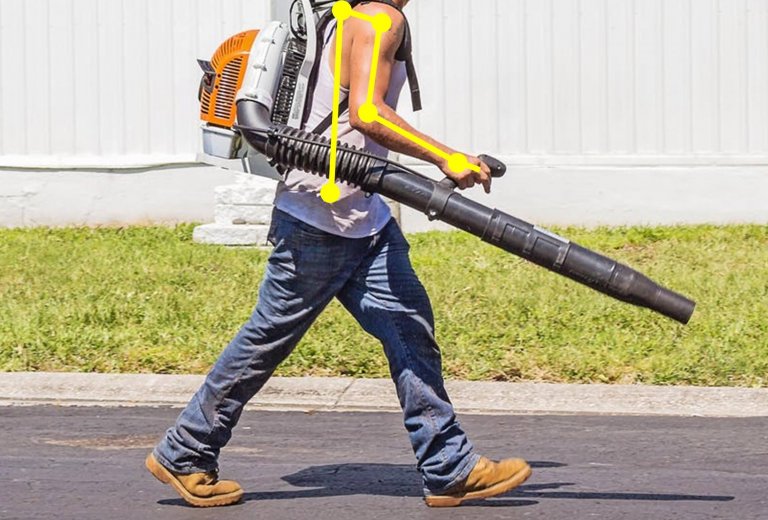
For the design of an ergonomic gripping and operating posture of hand-held devices, the joint chain from the clavicle joint through the shoulder joint and elbow joint to the wrist joint is particularly relevant. In addition to the maximum movement angles, the comfort areas for the upper body and the hand-arm system are important features for a user-friendly design of hand-held products.

Veranschaulichung der Greif- und Bedienhaltung anhand eines Laubbläsers hinsichtlich der Menschzentrierten Entwicklung

Rapid prototyping of physical human-machine interfaces of hand-operated devices

Once the human-machine interfaces have been analyzed and conceptualized using ergonomic methods, the next step is to realize them in prototype form to make the handling and operation tangible for users. Depending on the type of interface to be designed (Engl. Interface), different methods are effective. For example, modular or plug-in systems are suitable for manipulation elements such as guide handles to estimate the basic grip and grasping surface layout. For controls and detailing of handles, plastiline or clay can be used to approximate a suitable shape. To enable test users to experience a product close to series production in the early phases of product development, the use of 3D printing techniques becomes sensible. Once this state is reached, it is necessary to evaluate the usability of the prototype.
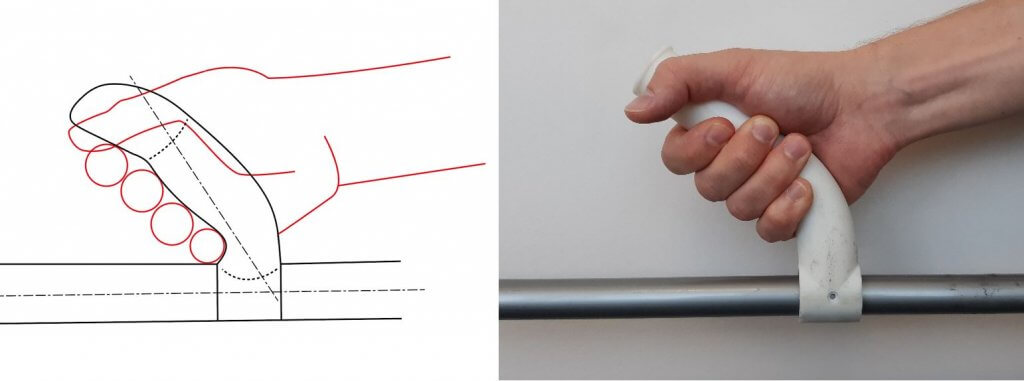
Skizze und Prototyp eines Handgriffs in der Bedienung

Fundamentals of usability evaluation

According to the DIN EN ISO 9241 standard series, usability (Engl. Usability) is the extent to which a product can be used by specific users in a specific usage context to achieve specific goals effectively, efficiently, and satisfactorily. Thus, effectiveness, efficiency, and user satisfaction are quantifiable metrics of usability that can be collected during the operation of the tool, i.e., during interaction with it. Evaluation methods are available for collecting these measurement parameters.

Usability evaluation methods can be divided into inspection and test methods according to Nielsen. Inspection methods are conducted by usability professionals and mostly involve checking compliance with heuristics or design guidelines. Here, an experienced usability expert analyzes the human-work tool interface of the technical product for conformity or deviation from existing and recognized guidelines. For hand-operated tools, this usually includes geometric specifications such as grip diameter or grip materials, as well as application-appropriate grip orientations and courses. In addition, the societal compatibilities recognized in the respective cultural circle and the affordance, the so-called offer character, of the design must be checked. For example, in the Western cultural circle, the green design of a control element is usually associated with the start of a process, while a red color marks the end of a process. The same applies to widespread symbols and icons, which should be considered accordingly in the design.

In contrast to these analytical methods, the second group of methods, the test methods, involves an empirical approach. It is necessary to enter the usage context and conduct observations and interviews with real users. The gold standard test method is the Usability Test, an evaluation of usability with users based on defined task processing, usually through participant observation.
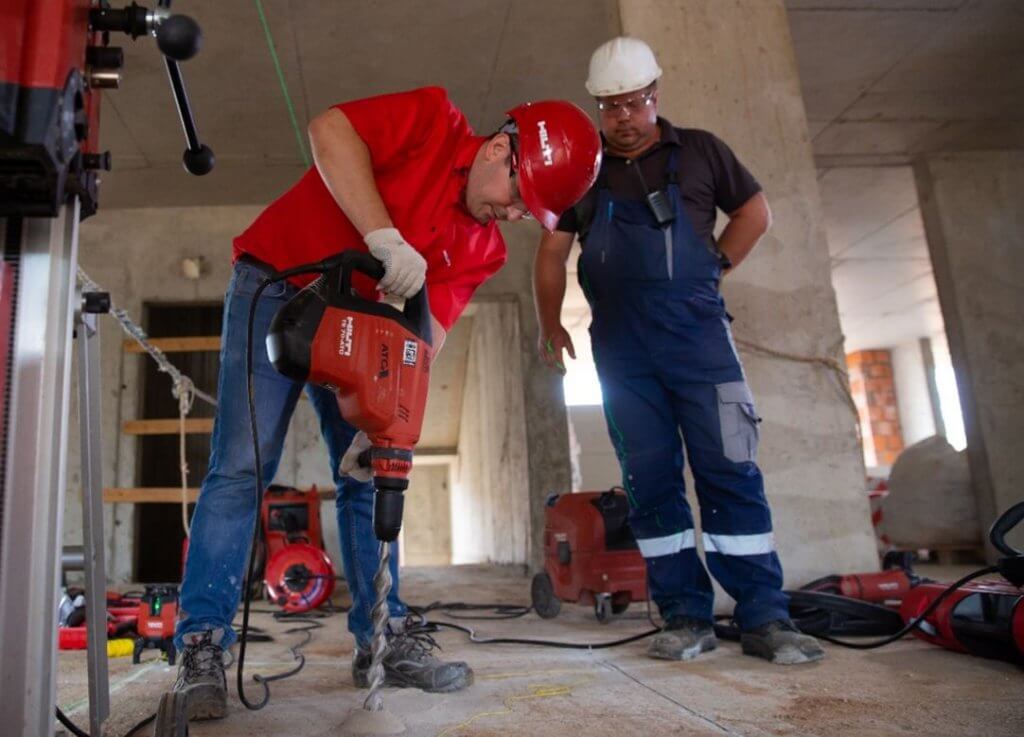
Reale Nutzer bedienen die Geräte in realer Nutzungsumgebung

Do you want to develop future-oriented and innovative work tools and devices and are looking for a reliable partner? Our experts in user-centered technology development and design are ready to assist you in this challenge.

STANDARDS / REFERENCES

Human-Centered-Design, a Corporate Philosophy

Understanding the intrinsic value of the Human-Centered-Design maturity

The term „user-centered design“ traditionally refers to the development of interactive systems, such as physical products like machine tools or digital services like cloud-based management dashboards, with a focus on the actual user. In the endeavor to further optimize these interactive systems, the human-centered approach has long been of relevance not only in selected phases of development.
Looking at the guiding principles of global players, one can recognize the penetration of the HCD approach (Human-Centered Design) down to the lowest levels.

This not only brings advantages for the later users in our modern work world through a positive user experience and effective, efficient, and satisfying interaction with these systems. The more deeply the „human-centered“ approach is embedded in companies (so-called HCD maturity), the more stakeholders are influenced by it. Thus, it would be wrong to consider such a level of maturity merely as an effort. Instead, it represents a source of sustainable and socially responsible innovative strength. This can be used to create superior products and services as well as a more desirable work environment.

TIP:

„HCD affects industries such as medical technology, not only impacting the professionals who often represent the primary users. Developers and product owners feel that their individual strengths and personality are valued and utilized, and that they can engage in responsible and meaningful work. Patients feel secure and acknowledged through this focus on health, safety, and well-being in dealing with human-centered interactive systems.“


But where should one start? In the daily work jungle, such approaches may seem more ideological in nature, or aren’t they?

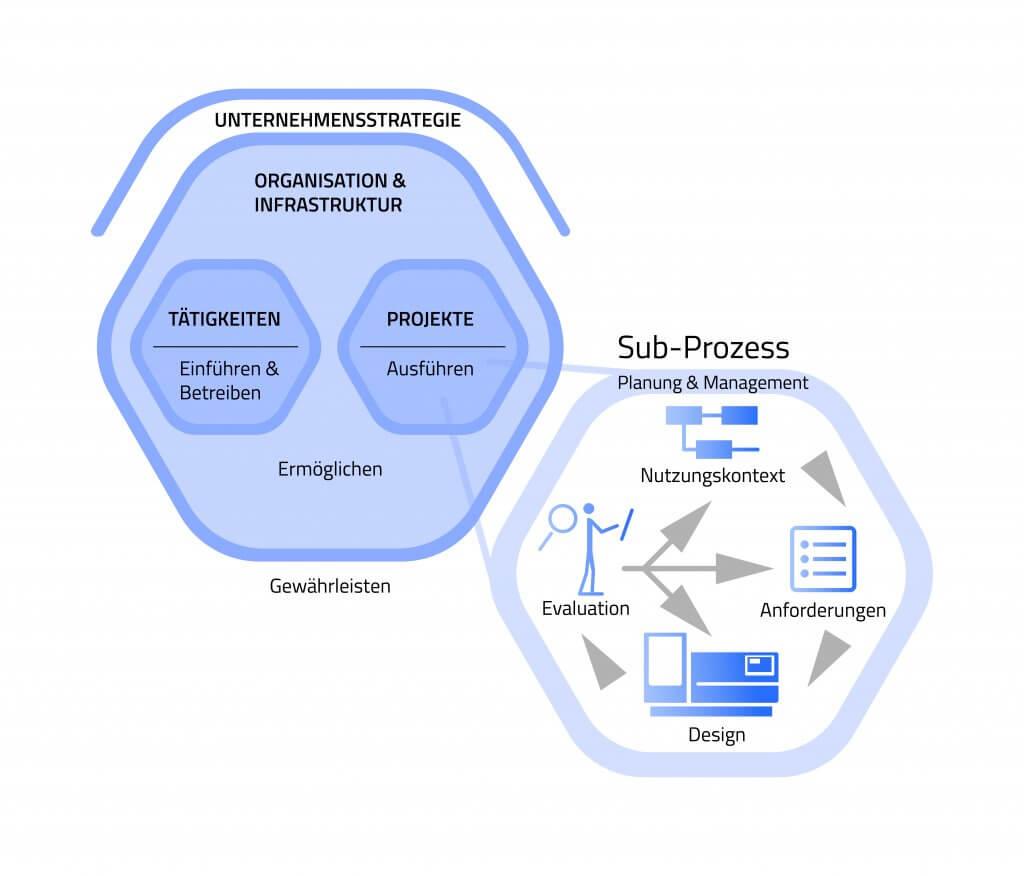
Often, it helps to first gain clarity about the associated activities through a clear and holistic structure to be able to tackle the first steps purposefully. The ISO 9241-220 provides the corresponding framework in the form of the holistically oriented HCD process model. In this model, HCD activities of various process categories (levels) are structured in the context of internal company processes and hierarchies. These range from everyday, operational work in and around projects to organizational and structural processes up to the overarching corporate strategy. Within these categories, numerous sub-processes can be carried out to improve the overall HCD maturity level. While at the highest level, guiding principles and corporate policies need to be aligned with human-centered design to sustainably increase the HCD maturity level, only the individual necessary actions in the daily development routine of experts in their respective fields lead to an initiative (introduction of HCD processes) and constant (operation of HCD processes) advancement of the HCD processes.

Prozess modell
Based on ISO 9241-220:2019-03

Central to this is the human-centered quality, which can extend across all areas, from specific product interface quality to the work quality of development teams. Potential HCD processes must first be identified, which are possible at all levels of the HCD process model.

TIP:

„HCD processes must first be planned and managed and brought into the right usage context. Subsequently, the requirements are specified, which are to be shaped through human-centered design. These must then be evaluated by the decisive and representative users using appropriate metrics within the respective HCD process.“

To iteratively improve these in the respective areas, it is therefore essential for all participants to understand and comprehend the following aspects: the purpose of an HCD process, such as tapping into new customer segments through information about new usage contexts and user needs – the associated benefits, such as claiming more market shares through knowledge of the necessary usage requirements and relevant acceptance criteria and the ability to effectively utilize them in development – the translation into outcomes, such as faster and more comfortable operation in the respective work task, which can lead to the consolidation of an innovative and forward-looking company image – through human-centered activities, such as continuous usage context analysis in the respective product development process, which is to be carried out sustainably and socially responsibly.

Responsible handling of such HCD processes always involves a constant assessment of the associated potential opportunities as well as expenditures and risks in the context of developing interactive systems. Achieving a „human-centered design“ maturity level thus represents not a sprint, but a marathon, in which, however, every step in the right direction pays off.

Contributions in this topic field

Standards & References

Success with Personas

The persona - a representation of a fictional, typical user for a product

They are based on the actual, current, or future user group, but do not depict a real existing person. The fictional but realistic persona helps developers to view their product from the user’s perspective and to identify with it. Therefore, personas aid in understanding the needs of the represented users and in generating solutions for the user’s interaction with the product.

Foundation of the persona

The persona is based on solid user research and requires a good understanding of the users. It should first be clarified who the current or future users are and what characterizes them. Various methods from the field of User Research can be used for this purpose, such as focus groups or contextual inquiry.

This subject area corresponds to the Empathize phase of the five-stage Design Thinking process, in which an understanding for the users is developed.

In the five-stage Design Thinking process, which consists of the phases Empathize, Define, Ideate, Prototype, and Test, the persona can be categorized into the „Define“ phase. In the Define phase, the results of the Empathize phase are summarized, and user-oriented problems are analyzed and defined. The persona provides a way to summarize and represent these results so that they can be communicated well to all involved in the product development process.

In the usability engineering process in medical technology, the persona, alongside the purpose specification and the usage context, can be part of the Use Specification.

Usually, several personas are created to represent the diversity of users. The sensible number of personas depends on the heterogeneity of the users.

TIP:

„It is often useful to transfer not only the typical, most frequently represented users but also atypical users into personas. If the product is also to be usable for the atypical persona, both extremes and thus the spectrum between them can be considered in the development. For example, alongside a healthy persona, a persona with severe sensory limitations or a persona without expertise and a persona with above-average expertise can be developed.“

Many products have several user groups, such as in medical technology where doctors and surgical nursing staff often work with the same product in different ways. If there are different user groups, they should each be represented by one or more personas.

Structure of a Persona

Personas contain demographic data, including name, age, gender, and place of residence. The persona’s social environment is also of great relevance. For example, it can be stated whether time is spent with friends and what the marital status is. Another aspect is the values, attitudes, and goals in life.

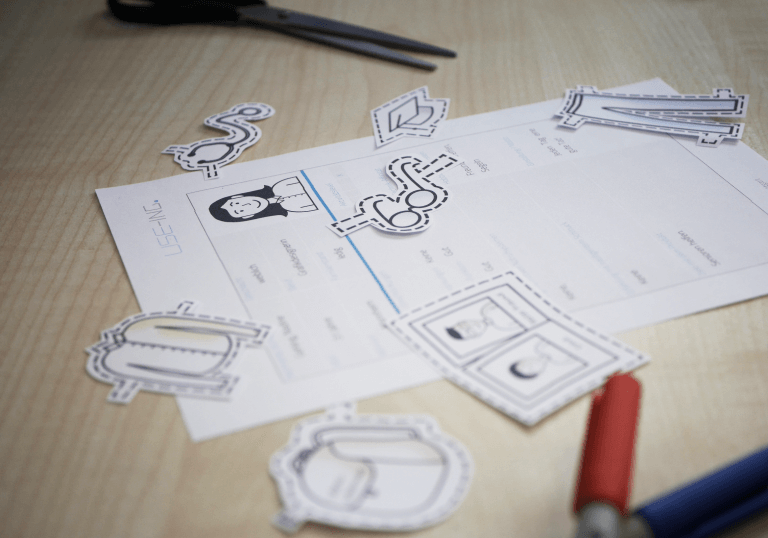
Typically, the persona is accompanied by an image to give it a literal face.

Details about the professional background and education are also part of the persona. In addition to the profession, leisure activities are relevant, so that the observers, i.e., those involved in the project, can imagine a typical day of the persona.

Further questions to be answered by the persona are: Does the persona have sensory or motor limitations? Does she have illnesses or is she particularly fit?

TIP:

„Even very detailed information, such as wearing glasses, can be helpful later in the design process.“

Additional product-specific details, such as special prior knowledge and previous experience with the product or similar products, can be valuable information and are therefore useful components of a persona. Which additional aspects are integrated and how priorities are set in designing the persona depends heavily on the product. Overall, the persona should present a coherent overall picture.

Working with Personas

Personas serve as a communication tool between all project participants. They can standardize the understanding of users in the project team and define properties of the users to be considered.

Based on the personas, usage scenarios can be created in the further process, which depict the persona using the product to be developed.

Viewing the product from the perspectives of the personas, and thus the users, is useful, for example, in generating problem solutions or developing ideas for new features. Personas are also suitable for uncovering and understanding specific pain points or critical usage situations.

Additionally, personas can be used to assist in decision-making or prioritization of ideas in the development process.

If new insights about the user group or the product emerge over time, the persona should be reviewed for its currency and possibly adjusted.

CONTRIBUTIONS IN THIS TOPIC FIELD

Learning from the User – Contextual Interview

The contextual interview - a combination of observation and questioning of users

Known as a contextual interview or Contextual Inquiry in English, it enables the direct learning of various aspects about the user themselves, the usage, and the usage context from the product’s user. The combination of observation and questioning uncovers relationships and backgrounds that can be incorporated into the product development process.

Therefore, the contextual interview is sensibly placed at the beginning or in the creative phase of the product development cycle. In the five-stage Design Thinking process, the method can be used in the „Empathize“ phase, which aims to build an understanding of the user. In medical technology, the contextual interview can be used as a User Research method for creating the Use Specification in the Usability Engineering process.

Preparation of the Contextual Interview

A contextual interview should be well prepared. This includes selecting suitable participants. It is advisable to consider each user group of the product.

TIP:

It is often useful to include participants with different experiences to allow various perspectives on the product. For example, a relatively new user and a long-term, routine user can be approached for a contextual interview. The wider the range of participants, the more diverse and comprehensive the usage of the product can be captured.

Furthermore, thematic focuses and relevant questions to be emphasized during the interview should be prepared. A guide should be created for a structured process. However, the interviewer should also flexibly adapt the questioning to the observed aspects and the individual answers of the interviewed user. Often, the questions become sharper with each conducted contextual interview, as the understanding of the relevant aspects continuously expands.

Execution

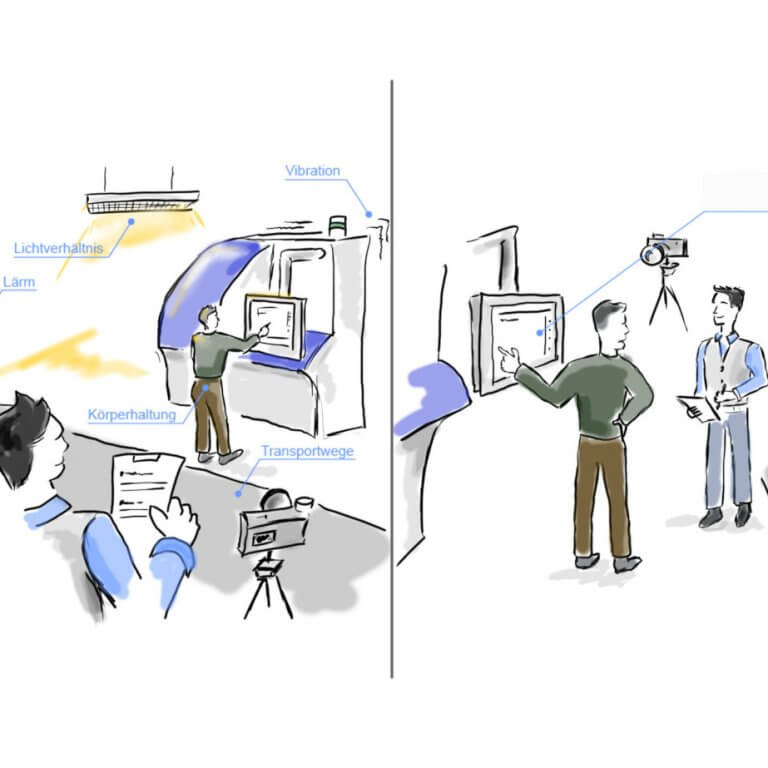
The contextual interview is conducted in the field, i.e., in the user’s usual usage environment. Firstly, the user is observed during interaction. The questioning follows in the second step.

During observation, it is recommended that the interviewer remains as inconspicuous as possible in the background to avoid influencing the usual workflow. In some cases, it may be useful to ask occasional intermediate questions during the observation, but care should be taken not to throw the user off track.

TIP:

„The less stressed and uncertain the user feels due to the observation, the more authentic and representative the observed use of the product is.“

To enable a detailed analysis at a later point, it is advisable to document the contextual interview using video or audio recording. This allows the interviewer to focus on the conversation and conduct it smoothly without interruptions for writing. Alternatively, the questioning can also be recorded by a note-taker. While this risks losing nuances of the conversation, it significantly accelerates the evaluation. A combination of both documentation methods enables the evaluation to be conducted based on the notes and to refer to the video or audio recording in case of uncertainties in the notes.

Topics of the Contextual Interview

Aspects that can be captured in a contextual interview include workflows, the individualization of the product, and difficulties in interaction. Also, when and how often the product is used can be of high relevance.

Observing the user allows the capturing of implicit knowledge. Implicit knowledge refers to knowledge that the user can apply in the relevant situation but otherwise cannot easily articulate in theory.

The best-known example is tying shoes, which is a daily task for most people. Yet, the exact procedure is difficult for many to describe. The same phenomenon can occur with the user’s routine interaction with a product, making it challenging to capture implicit knowledge in a general survey.

The work environment and influences such as noise or lighting conditions, as well as dependencies and communication with colleagues and superiors, can also be relevant factors and captured via the contextual interview. The use of aids or the transfer of information or products are often meaningful aspects that can be observed and questioned. For example, if data need to be imported or exported into the system, difficulties with the compatibility of file formats can arise, making integration into the user’s overall workflow difficult.

If the interviewer notices unusual interactions or user irritation during observation, these can be directly addressed in the interview. Specific behaviors can be questioned, thus uncovering connections and optimization potentials.

Working with the Results

After conducting the interview, the notes or video/audio recordings should be evaluated promptly using appropriate methods. The results can then, for example, be transferred into personas and scenarios suitable for communicating the results to all project participants.

Uncovered pain points and optimization potentials can be directly transferred from the evaluation into product development.

The disadvantage of the contextual interview is the time required for execution and evaluation. However, the method is well suited for a thorough, empirical analysis of usage requirements. It is particularly suitable for the further development of an existing product or for integrating a new product into an existing workflow.

CONTRIBUTIONS IN THIS TOPIC FIELD

Standards & References